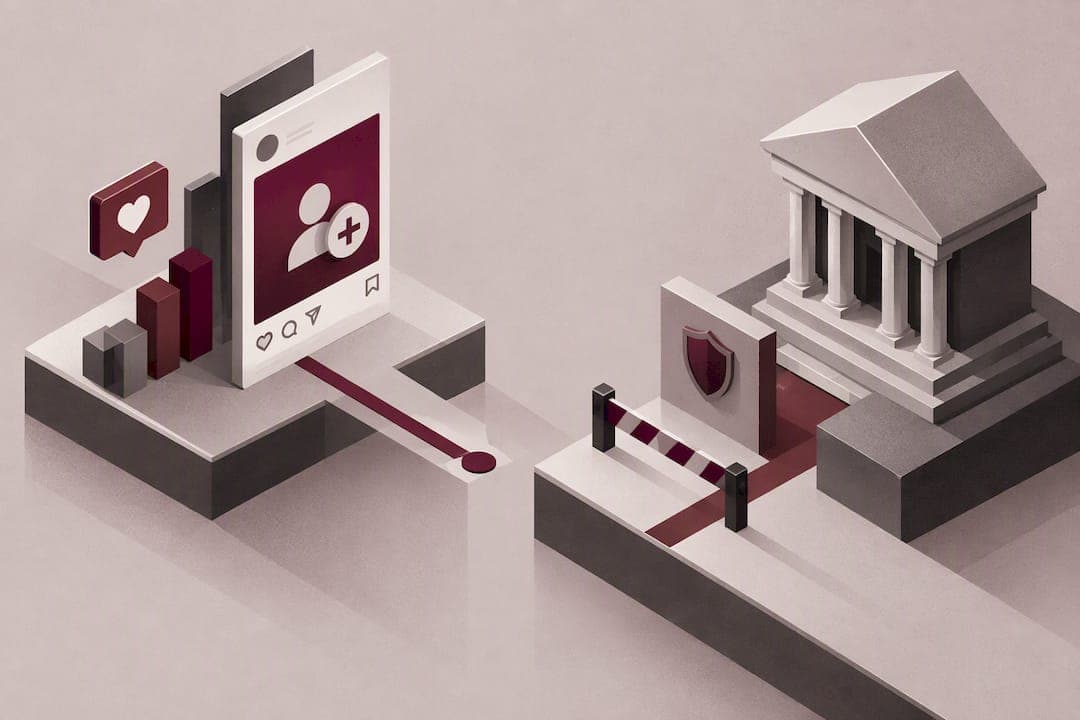
Short answer: yes, buying Instagram followers can get your account penalized, and in some cases suspended or terminated. The documented floor is removal of the fake activity itself, which Instagram does routinely. The ceiling, reserved for repeat or commercial misuse, includes feature limits and account termination, with added legal exposure for US businesses under a 2026 FTC rule. The sections below cover platform policy, detection, and safer paths forward.
TL;DR:
- Buying followers can lead to account removal of fake activity, feature limits, warnings, and possible suspension, especially for repeat violations or commercial misuse.
- Legal risks for US businesses increase under the 2026 FTC rule, which considers knowingly using fake indicators of influence as deceptive practices.
- Detection systems flag sudden follower spikes with low engagement, bot-like profiles, and rapid, automated activity, often resulting in fake follower removal first.
- Purchasing followers via password-sharing services carries high risks of account compromise, malware, and quicker enforcement actions.
- Safer growth strategies include targeted ads, collaborations, consistent posting, and active engagement, with precautions like avoiding password sharing and recognizing suspicious activity.
Table of Contents
- What Instagram and Meta policy say about buying engagement
- What the FTC's 2026 rule means for commercial buyers
- How detection works and what happens after you buy followers
- Common scenarios and what security researchers have found
- Safer alternatives and how to protect your account
- Where the risk actually sits and when it's worth taking
- How Boost Up Agency packages work for creators who want a quick boost
- FAQ
- Sources
What Instagram and Meta policy say about buying engagement
Meta's own rules are specific on this point. The spam policy in the Transparency Center prohibits selling, buying, or exchanging for engagement, including likes, shares, views, and follows. That language covers the exact transaction a follower purchase represents, which means the activity itself sits outside what the platform allows, regardless of how convincing the followers look.
Meta's enforcement response follows a documented pattern rather than a single automatic penalty. Inauthentic activity gets removed first, and accounts that rely on third-party apps for likes or followers risk broader consequences on top of that cleanup.
Here's what Meta describes as its typical response:
- Removal of the inauthentic follows, likes, or comments tied to the activity.
- Feature limits, such as restricted commenting, posting, or messaging.
- Account-level warnings or prompts to verify identity or change credentials.
- Suspension or termination for accounts that repeat the behavior or combine it with other violations.
That graduated approach matters because it tells you the outcome depends heavily on pattern and scale, not just on having purchased followers once.
What the FTC's 2026 rule means for commercial buyers
Beyond platform enforcement, a federal rule now adds legal weight to this issue in the United States. The FTC's Consumer Reviews and Testimonials Rule, codified at 16 CFR Part 465, treats buying or selling fake indicators of social media influence as an unfair or deceptive practice when the activity is used to mislead a commercial audience.
The rule applies a knowledge standard: liability attaches when a buyer knew or should have known the followers were fake, which shifts risk onto brands and paid promoters who use follower counts to signal credibility to customers.
A few practical distinctions worth keeping straight:
- The rule targets commercial deception, so a private account buying followers for personal vanity faces lower regulatory exposure than a business account doing the same.
- Liability turns on what the buyer knew or reasonably should have known about the followers being fake.
- Brands and influencers who monetize their following should document disclosures and avoid presenting purchased metrics as organic reach.
This doesn't replace platform enforcement, it stacks on top of it for anyone using Instagram metrics in a commercial pitch.
How detection works and what happens after you buy followers
Instagram's detection systems look for patterns that distinguish a real audience from a purchased one. A sudden spike in followers with no corresponding rise in likes or comments is one of the clearest signals, since genuine growth usually brings proportional engagement with it.
Common triggers include:
- A sharp, unexplained jump in follower count over a short period.
- Low engagement relative to follower size, meaning likes and comments stay flat while followers climb.
- Bot-like behavior among the new followers, such as empty profiles or no posting history.
- Credential sharing with a third-party service, which Instagram can flag through login location or device anomalies.
- Automated engagement patterns, like identical comment text or likes delivered in rapid bursts.
Enforcement tends to follow a ladder rather than jump straight to suspension: automated removal of the fake followers or likes comes first, then temporary feature limits, then password-change prompts if credential misuse is suspected, and finally suspension or termination for accounts that keep repeating the behavior.
A shadowban sits between those steps. It isn't a formal suspension, it's a practical drop in how often your content gets surfaced to non-followers, which quietly undercuts future growth even when your account technically stays active.
Pro Tip: Check your engagement rate, not just your follower count, since a widening gap between the two is often the first sign Instagram's systems have flagged your account.
Common scenarios and what security researchers have found
Real-world outcomes vary more than people expect. Many buyers see the purchased followers quietly removed within weeks, with no further action taken against the account. Others, particularly those who repeat the purchase or combine it with other automated growth tools, see feature limits or suspension months later once a broader pattern emerges.
The bigger risk often isn't the follower count itself, it's the delivery method. Security reporting on follower and engagement scams found that services requesting login credentials or automating engagement create the most common triggers for both platform penalties and account compromise, including credential theft and malware.
A few patterns stand out from that reporting:
- Services that ask for your password carry the highest risk of account takeover, independent of any Instagram policy violation.
- Automated engagement, such as bot-driven likes or comments, produces detectable patterns that flag accounts faster than a one-time follower purchase.
- Purchased followers frequently don't engage at all, which means the audience quality, not just the policy risk, limits any real benefit.
Safer alternatives and how to protect your account
If the goal is real growth, there are lower-risk paths that build an audience Instagram's systems won't flag. Paid ads let you target specific demographics without touching the spam policy. Creator collaborations put your account in front of an audience that already engages with similar content. Consistent posting and active participation in your niche's comments and conversations builds the kind of engagement that purchased followers never deliver.
If you're still weighing a third-party follower service, a few precautions reduce your exposure significantly:
- Never share your Instagram password with any service, regardless of what it promises.
- Avoid packages that advertise automated likes, comments, or engagement on top of followers.
- Look for gradual delivery patterns rather than instant, bulk follower drops, since gradual growth mimics organic behavior more closely.
- Prioritize services that explicitly operate without requesting your password.
Pro Tip: If you ever get a password-reset email you didn't request, or notice unfamiliar login activity, treat it as an active compromise and act immediately rather than waiting to see if it resolves.
If you suspect your account has already been flagged or limited, change your password right away, enable two-factor authentication, review and revoke access for any connected third-party apps, and contact Instagram support directly if features remain restricted after those steps.

Where the risk actually sits and when it's worth taking
The honest trade-off here is that buying followers rarely moves the needle on real growth, since purchased accounts don't engage, comment, or become customers. The risk isn't hypothetical either: policy violations are real, and the 2026 FTC rule adds a genuine legal dimension for anyone using follower counts commercially.
That said, not every use case carries the same exposure. A creator who wants a quick, personal credibility boost and never shares a password faces a different risk profile than a brand citing follower counts in a sales pitch. Some packages are built around password-free ordering and gradual delivery, which lowers the credential-theft risk that security researchers flag as the bigger danger in this space, though it doesn't erase platform policy risk entirely.
Anyone using purchased followers in a commercial context should avoid presenting that number as organic reach to customers or sponsors. Transparency protects you more than any delivery method does.
— nate
How Boost Up Agency packages work for creators who want a quick boost
Some services sell Instagram follower packages delivered gradually and without requiring your password. That gradual delivery pattern is designed to look like natural growth rather than the instant spike that tends to draw attention, and some sellers offer a delivery guarantee.

The process often stays simple: choose a package, enter your handle, and watch your follower count grow over the following days. For creators juggling content schedules and deadlines, that means a visibility boost without the extra step of training a new tool or waiting on a longer campaign.
If you decide this route fits your needs, keep platform and regulatory guidelines in mind: avoid presenting purchased followers as organic reach in any commercial pitch, and never pair a follower package with a service that asks for your login credentials.
- 1,000 Followers at $4.99 one-off
- 2,500 Followers at $9.99 one-off
- 5,000 Followers at $29.99 one-off
- 10,000 Followers at $49.99 one-off
- 25,000 Followers at $109.99 one-off
- 50,000 Followers at $149.99 one-off
Browse the full lineup and start an order on our follower packages page.
FAQ
Is it illegal to pay for followers on Instagram?
Paying for followers isn't a criminal offense, but under the FTC's 2026 rule, using fake indicators of influence to mislead a commercial audience can count as an unfair or deceptive practice. That exposure applies mainly to businesses and paid promoters, not private individuals buying followers for personal use.
Is it okay to buy Instagram followers?
Buying followers violates Meta's spam policy, which bans buying, selling, or exchanging engagement including follows. The platform response typically starts with removing the inauthentic followers, though repeated violations can escalate to feature limits or suspension.
How much does it cost to buy 1,000 followers on Instagram?
Pricing varies by vendor, and our own 1,000 Followers package is listed at $4.99 one-off. Costs depend on delivery speed, whether a password is required, and whether the service includes automated engagement add-ons that carry extra risk.
Is buying followers a crime?
No, it isn't treated as a criminal act, but it can trigger civil liability under the FTC's rule when a business or influencer knowingly uses fake followers to deceive customers commercially. For personal accounts, the bigger practical risk remains platform enforcement rather than legal consequences.
Can Instagram suspend accounts for buying followers?
Yes, Instagram can suspend or terminate accounts that repeatedly use third-party services to inflate follower counts, according to guidance on the platform's enforcement patterns. The more common outcome is removal of the fake followers first, with suspension reserved for repeat or egregious cases.